Most loan officers get to the end of a great conversation and blow it.
They’ve built rapport. They’ve found the pain. They’ve painted the picture of possibility.
Then they jump straight into pitch mode like a used car salesman at month-end.
“So here’s what I can do for you…”
And just like that, the prospect’s walls go up. Their brain switches from “interested buyer” to “defensive mode.”
Here’s the thing: you don’t need to convince anyone of anything if you set it up right.
The Permission Problem

When you launch into your pitch without permission, you’re basically saying:
“I don’t care if you want to hear this or not. I’m talking.”
Your prospect feels ambushed. Trapped. Like they’re being sold to instead of helped.
But what if there was a way to make them ask you to present your options?
What if they actually wanted to hear your pitch?
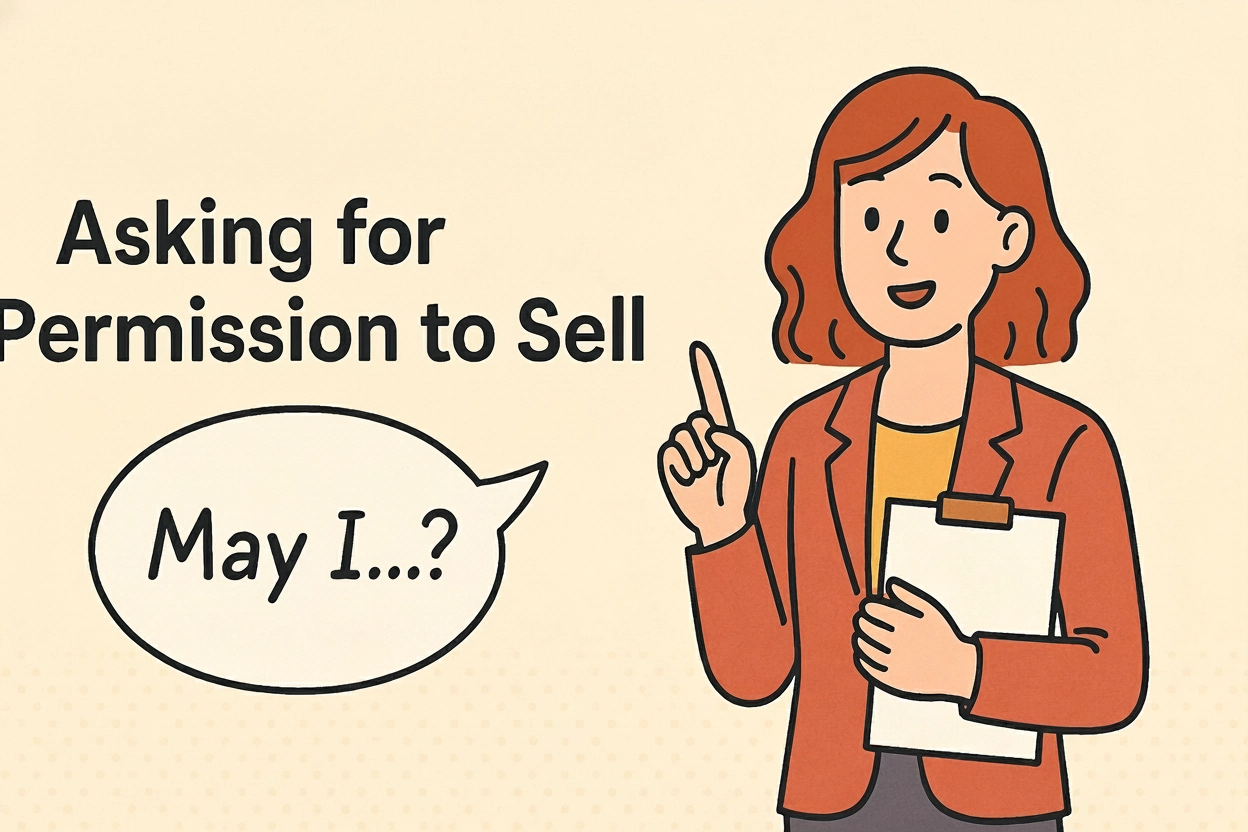
That’s exactly what asking for permission does.
The Setup: Three Things Must Happen First
Before you even think about asking for permission, you need three things in place:
1. Yeses – They’ve agreed with you on multiple small points throughout the conversation
2. Pain – They’ve admitted there’s a problem they need to solve
3. Possibility – They can see how solving this problem improves their life
Without these three, asking for permission is pointless. You’re just being polite while pitching to someone who doesn’t want what you have.
But when you have all three? Now you’re ready to work some magic.
The Permission Play: Two Simple Phrases
Here’s the exact language that turns resistance into receptivity:
Option 1: The Open-Minded Frame
“Everything I have here looks really awesome. I’ve got a couple of different options. If you’re open-minded, would you like to hear them?”
This is brilliant because:
- It acknowledges their situation looks good (validation)
- It implies you have multiple solutions (choice)
- It appeals to their identity as an open-minded person
Nobody wants to say “No, I’m close-minded.” So they say yes.
Option 2: The No-Oriented Question
“Would you be opposed to hearing your options?”
This one’s even better because it uses reverse psychology.
The natural response is: “No, not at all.”
But here’s the beautiful part – their “no” actually means yes.
They’re saying no to being opposed, which means yes to hearing your pitch.
Why This Works: The Psychology Behind Permission

There are three psychological triggers at play here:
1. Identity Protection
People like to see themselves as open-minded and reasonable. When you frame listening to your options as an open-minded thing to do, they’ll agree to protect that self-image.
2. Choice Creates Commitment
When someone gives you permission, they’re not just listening – they’re choosing to listen. That choice creates a tiny commitment. And people hate to waste their own decisions.
3. Resistance Goes Down
The moment someone grants permission, their defenses drop. They’re no longer being “sold to” – they asked to hear this information.
It’s the difference between a home invasion and an invited guest. Same person, same house, completely different reception.
The Script in Action
Here’s how this plays out in a real conversation:
You: “So if I’m hearing this right, you want to buy in the next 90 days, you’re frustrated with the rates you’ve been quoted, and you’re worried about your debt-to-income ratio holding you back. Is that accurate?”
Them: “Yeah, exactly.”
You: “Okay, good. I’ve been looking at your situation while we’ve been talking, and honestly, everything here looks really solid. I’ve got a couple of different programs that might work. If you’re open-minded, would you like to hear them?”
Them: “Sure, absolutely.”
You: “Great. Here’s what I’m thinking…”
See how natural that feels? They want to hear what you have to say.
Common Mistakes That Kill the Permission

Don’t screw this up by:
Making the permission request too salesy
- Bad: “I have the perfect loan for you. Want to hear about it?”
- Good: “If you’re open-minded, would you like to hear your options?”
Asking before you’ve built pain and possibility
- If they don’t see a problem, they don’t want solutions
Using weak language
- “I guess I could show you some programs…” sounds uncertain
- “I’ve got a couple of different options…” sounds confident
Forgetting the no-oriented approach
- “Do you want to hear your options?” invites a “no”
- “Would you be opposed to hearing your options?” makes “no” mean “yes”
Why Most Loan Officers Skip This Step
They think asking for permission wastes time.
“I already know they need a loan. Why ask if they want to hear about loans?”
Because needing something and wanting to hear about it are two different things.
Your prospect might need a root canal, but they don’t want to hear about drill speeds and pain levels.
Permission bridges that gap between need and want.
The Bigger Picture: Sales Is Positioning, Not Convincing

Here’s what most people get wrong about sales:
They think it’s about having the best pitch, the smoothest talk, or the most compelling features and benefits.
It’s not.
Sales is about positioning. It’s about setting up the conversation so the client sells themselves on why they should work with you.
When you structure the conversation correctly:
- You ask the right questions
- You listen for pain and possibility
- You get permission before you pitch
- They’re ready to hear your solution
The close becomes inevitable because they’ve already decided they want help, and you’re the person offering it.
Your Next Steps
Stop pitching without permission.
Start every offer with one of these two phrases:
- “If you’re open-minded, would you like to hear your options?”
- “Would you be opposed to hearing what I’m thinking?”
Watch what happens to your close rate.
Watch how much less resistance you get.
Watch how conversations flow instead of fight.
Permission isn’t just polite – it’s profitable.
Try it on your next three calls and see for yourself. Most loan officers will keep doing what they’ve always done and wonder why prospects keep saying no.
But you’re not most loan officers.
You’re someone who understands that the setup is everything, and the close is just a formality when you do the work upfront.
Position first. Pitch second. Close with confidence.
That’s how you turn conversations into commissions without feeling like you’re twisting anyone’s arm.
Because the best sales don’t feel like sales at all. They feel like help.