
I just finished reading Wolf Richter’s latest piece over at Wolf Street, and I had to share this with you.
If you’re in real estate or mortgages and you’re not reading Wolf Street, fix that today. No spin. No fluff. Just sharp, honest data.
And this latest newsletter? It’s a wake-up call.
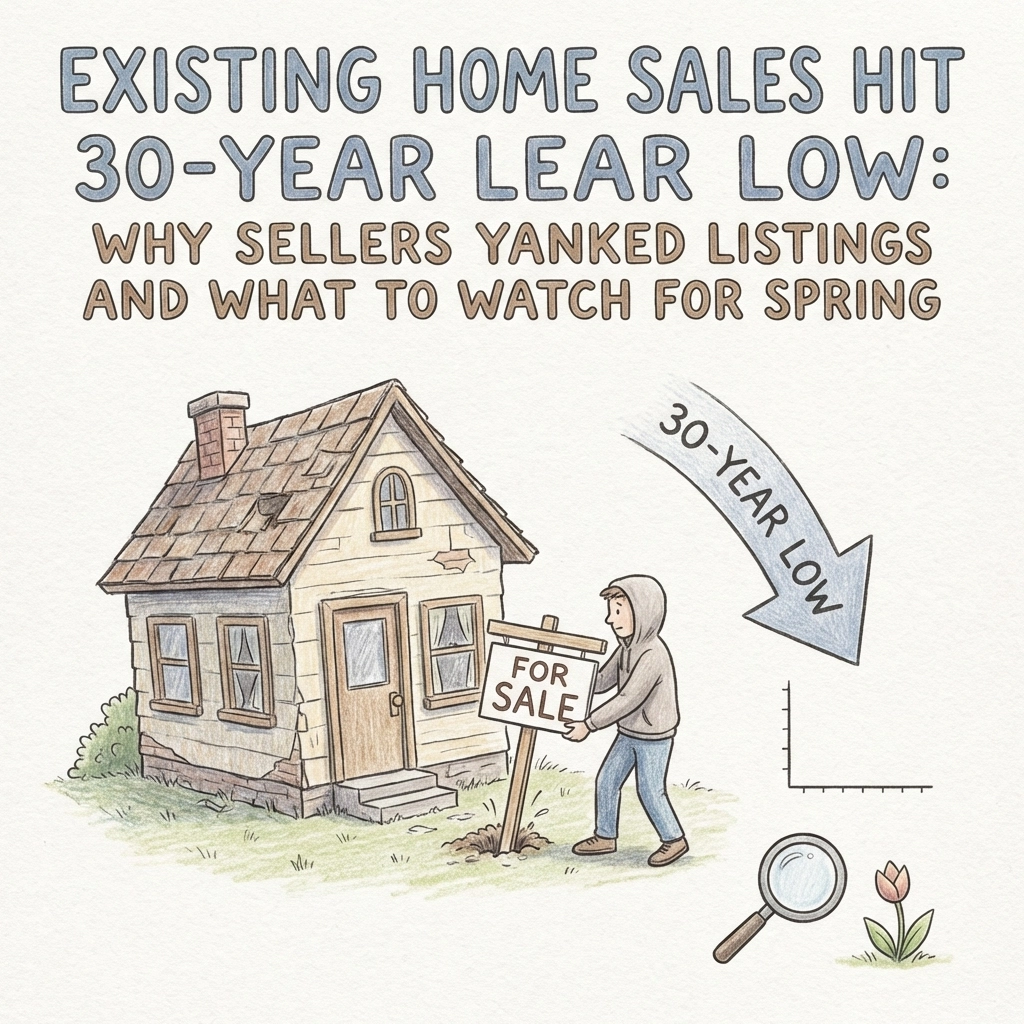
Existing home sales in 2025 dropped to 4.06 million.
That’s the lowest level since 1995.
Let that sink in. We haven’t seen numbers this bad in 30 years.
The Numbers Don’t Lie
Here’s the headline stat that matters:
Annual existing home sales have now declined four years in a row. We’re down 34% from the pandemic highs.
That’s not a dip. That’s not a correction. That’s a trend.

Single-family sales ticked up slightly in 2025, barely. But condos and co-ops? They dropped even further.
December sales did improve compared to December 2024. But zoom out and compare to earlier years? Still way off.
Most people look at month-over-month numbers and feel good. That’s a mistake.
You’ve got to look at the bigger picture. And the bigger picture says buyers aren’t showing up the way they used to.
Why Did Sellers Yank Listings?
Here’s where it gets interesting.
Supply plummeted in December. Not surprising, holiday season always slows things down.
But this year? The pullback was even stronger.
Inventory dropped 18.1% from November to December. We ended the year at just 1.18 million units on the market. That’s only 3.3 months of supply at the current sales pace.
Sellers are playing the waiting game.
They’re pulling their homes off the market, hoping for:
- Better prices
- Lower mortgage rates
- More buyer demand in spring
It’s a mass delisting event. Everyone’s betting on spring 2026 being the reset.
But here’s the thing most people don’t want to hear:
Hope isn’t a strategy.

If demand doesn’t return, these sellers are going to be stuck. Waiting doesn’t work if buyers aren’t waiting with you.
The Condo Situation Is Worse
Let’s talk condos for a second.
Condos saw record delistings in 2025. Sellers couldn’t move them, so they yanked them.
Some markets saw massive price cuts just to get offers. And even then? Sales volume tanked.
Why?
A few reasons:
- HOA fees are up
- Insurance costs are through the roof (especially in Florida)
- Buyers have less appetite for shared-wall living post-pandemic
Median condo prices did tick up slightly year-over-year. But don’t let that fool you. Volume is way down.
Price without volume is a mirage. You can list your condo at whatever you want. Doesn’t mean anyone’s buying.
Prices Are Up… But Uneven
Here’s where people get confused.
Yes, home prices are still up compared to 2020. Way up.
But the gains are wildly uneven depending on your market.
- Austin: Down 24% from peak
- Milwaukee: Up 4% year-over-year
Same country. Completely different reality.
Median single-family prices actually declined slightly month-over-month in December. Year-over-year? Barely up 0.2%.
That’s not growth. That’s flatline territory.

If you’re a seller banking on appreciation to bail you out, you might be waiting a while.
And if you’re a buyer thinking prices are going to crash? Don’t hold your breath. Inventory is too low for a collapse.
We’re in a standoff. Buyers can’t afford to buy. Sellers don’t want to sell for less. Nobody’s moving.
What’s Everyone Waiting For?
Spring.
That’s the bet.
Sellers are hoping:
- Mortgage rates drop further
- Buyers come off the sidelines
- Demand picks back up
Mortgage rates did ease to 6.19% in December: the lowest in over a year. And forecasts say they could drop a bit more in early 2026.
But here’s the risk:
What if spring doesn’t deliver?
If rates don’t drop enough, buyers stay stuck. If buyers stay stuck, sellers who pulled listings in December come back to market in March… and compete with each other.
More inventory + same weak demand = price pressure.
Spring 2026 could be a make-or-break moment for a lot of sellers.
What Should You Watch?
If you’re in this industry: or thinking about buying or selling: here’s what to keep your eyes on:
1. Mortgage Rate Trends
This is the big one. If rates drop below 6%, you’ll see more buyers jump in. If they stay elevated, the standoff continues.
2. Inventory Recovery
Watch February and March. California forecasts show active listings could rise nearly 10% as sellers come back to market. If inventory spikes but demand doesn’t, prices will soften.
3. Regional Differences
Stop looking at national data like it tells the whole story. Your market is not the same as Austin, Phoenix, or Miami. Know your local numbers.
4. Affordability Signals
Home price growth is expected to stay mild in 2026. That’s good for buyers. But affordability challenges aren’t going away overnight. Insurance costs, property taxes, and HOA fees are all rising.
5. External Headwinds
Trade tensions. Insurance issues (especially in disaster-prone areas). Economic uncertainty. These aren’t going away. They’ll continue to put pressure on the market.
The Bottom Line
2025 was rough.
Existing home sales hit a 30-year low. Sellers yanked listings en masse. Condos got crushed. Prices went sideways.
And now everyone’s betting on spring to save the day.
Maybe it will. Maybe it won’t.
But here’s what I know:
If you’re a mortgage pro or real estate agent, you can’t control the market. You can only control how you show up.
The agents and loan officers who win in 2026 won’t be the ones hoping for better conditions.
They’ll be the ones who:
- Educate their clients on what’s really happening
- Stay visible when everyone else goes quiet
- Add value before the transaction
That’s how you become the resource: not just another rate check.
Want Sharp, No-Spin Housing Data?
Seriously, go check out Wolf Street.
Wolf Richter doesn’t sugarcoat anything. He gives you the data, the charts, and the context. No hype. No clickbait.
If you want to understand what’s actually happening in housing: and not just what the headlines want you to believe: it’s one of the best resources out there.
I read it. You should too.
What’s your read on spring 2026?
Are sellers going to come flooding back? Or is this standoff going to drag on?
Drop me a message. I’d love to hear what you’re seeing in your market.