
Let’s talk about something every single one of us deals with but very few are actually trained on:
Upset clients.
Borrowers.
Agents.
Partners.
Team members.
As volume goes up, problems go up. That’s just math.
The mistake most loan officers make?
They try to win the argument instead of win the relationship.
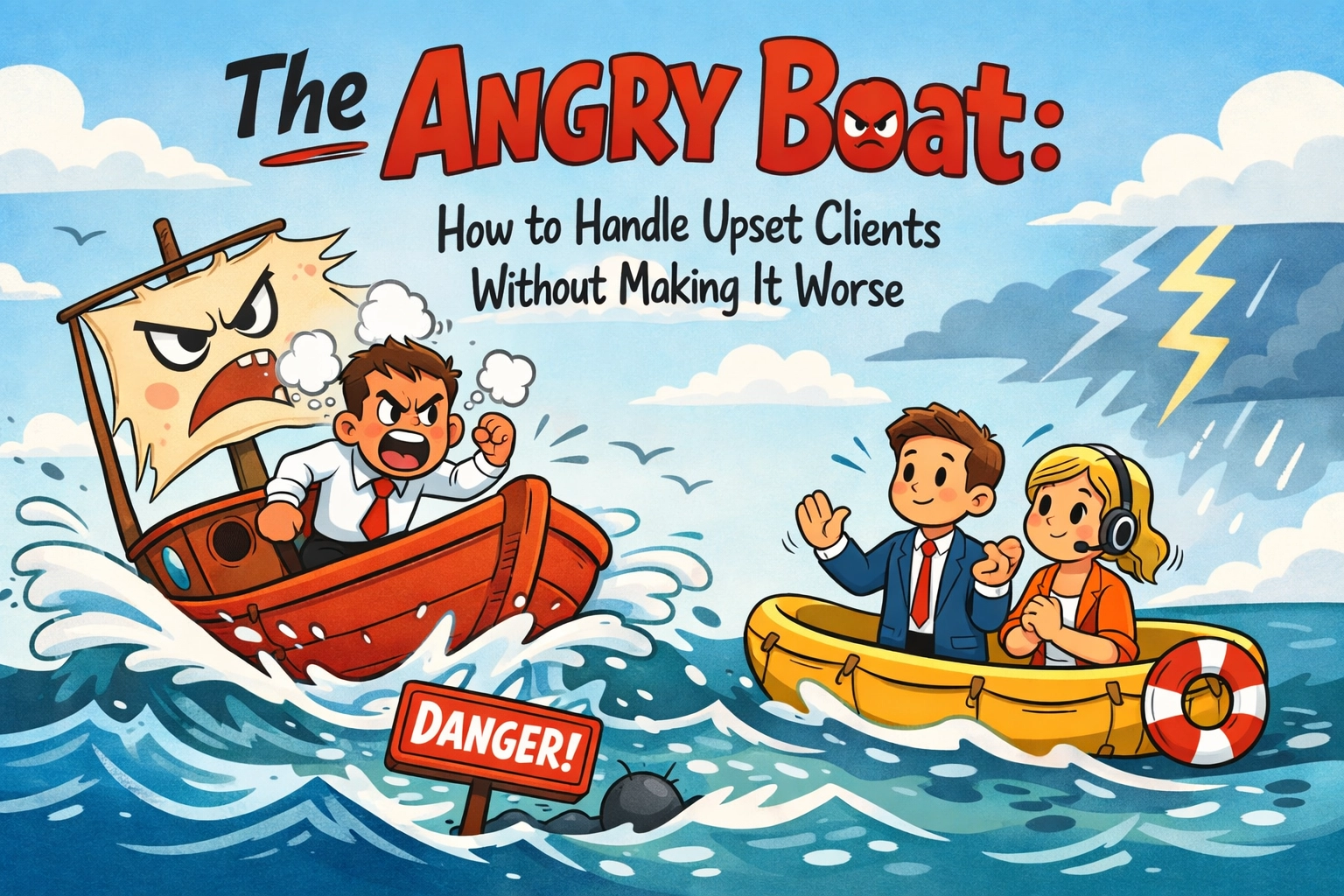
That’s where The Angry Boat comes in.
The Real Problem With Upset Clients
When someone comes to you hot, they’re usually not asking for:
- A detailed explanation
- A defense of underwriting
- A breakdown of the process
- A lesson on why this happened
They’re asking one thing:
“Do you hear me?”
When they don’t feel heard, they escalate.
When they do feel heard, they calm themselves down.
What Most People Do (And Why It Fails)
Here’s the default reaction:
- Defend yourself
- Minimize the issue
- Explain why it’s not that bad
- Shift blame to ops, underwriting, or “the system”
That puts you on the opposite side of the boat.
Now it’s:
You vs. them.
Logic vs. emotion.
And logic never wins against emotion.
Enter: The Angry Boat
The idea comes from an email by Alex Hormozi, and once you see it, you can’t unsee it.
Instead of trying to calm the client down…
👉 You jump in the angry boat with them.
Same side.
Same problem.
Same enemy.
When you do that, something interesting happens:
They calm you down.

Why This Works (Human Psychology 101)
People don’t want to fight someone who’s fighting for them.
When you:
- Match their emotion
- Amplify their frustration
- Outrage the situation with them
Their nervous system relaxes.
They think:
“Okay… I’m not alone here.”
Now you’re no longer the problem.
You’re the ally.
What “Jumping in the Angry Boat” Actually Sounds Like
This is the key part most people mess up.
You don’t just agree quietly.
You go bigger than they did.
Example: Upset Borrower
Borrower:
“This is ridiculous. We’re paying good money and now we’re in this situation.”
You:
“You’re absolutely right. This shouldn’t have happened. If I were in your shoes, I’d be furious. This is unacceptable, and I’m going to make sure it gets fixed.”
Notice what’s missing:
- No defending
- No explaining
- No finger-pointing
Just alignment.
Watch A Quick Video
A Simple Framework You Can Use Every Time
Step 1: Let Them Vent
Don’t interrupt.
Don’t fix yet.
Let them get it out.
Step 2: Validate + Amplify
Say it louder than they did.
Examples:
- “That’s completely unacceptable.”
- “You’re right to be upset.”
- “This is not how this should go.”
⚠️ Important:
You are not admitting fault.
You are acknowledging emotion.
Step 3: Put Yourself on Their Team
Shift the language.
❌ “Here’s why this happened…”
✅ “Here’s what we’re going to do about it.”

Mortgage-Specific Scripts You Can Steal
Borrower Script
“I get why you’re upset. This puts you in a bad spot, and that’s not okay. If I were you, I’d be frustrated too. Let’s slow this down and fix it.”
Realtor Partner Script
“I completely understand why you’re fired up. This affects your reputation with your client. Let’s walk through how we protect the deal from here.”
Team / Ops Script
“This is a miss. No finger-pointing. Let’s fix it fast and make sure it doesn’t happen again.”
Why Defending Yourself Makes It Worse
The moment you say:
- “Here’s why underwriting did that…”
- “That’s not really what happened…”
- “You’re misunderstanding…”
You’ve left the boat.
Now you’re arguing facts with someone who’s emotional.
You may be right…
but you’re also losing.

The Kid Example (This Makes It Obvious)
Your kid comes home angry:
“Jimmy stole my bike!”
If you say:
“Well, are you sure? Maybe it was an accident…”
They escalate.
If you say:
“You’re kidding me?! Jimmy did WHAT?! I’m going over there right now!”
Your kid:
“No no no Dad, it’s okay…”
Same psychology.
Different arena.
When NOT to Use the Angry Boat
This is a tool, not a hammer.
Don’t use it if:
- Someone is being abusive
- There’s no emotion involved
- You’ve already aligned and now need to move forward
This is for de-escalation, not avoidance.
How This Fits With ARC / ARP
If you already use ARC, this plugs right in:
- Acknowledge → Jump in the boat
- Respond → Provide clarity or solution
- Close or Pivot → Next step
Emotion first.
Logic second.
Always.
The Big Takeaway
Here’s the line to remember:
You don’t calm people down by calming them down.
You calm people down by making them feel heard.
Upset clients are inevitable.
Losing deals because you handled it wrong is optional.
Next time someone comes in hot…
Don’t argue.
Don’t defend.
Don’t explain.
Grab a paddle.
Jump in the angry boat. 🚤
Want more frameworks like this that actually work in the field? Join our free community where we break down real situations with real solutions.